Gatekeeping often feels like a dirty word in disability circles online. But it very often isn’t.
It is often how things stay truly fair and accessible, in the sense that people who really and genuinely need help get it.
It isn’t just theatres. At Walt Disney World in Orlando, even when Disabled families wanted to provide medical documentation justifying their needs, the parks refused to accept it. Abuse or exaggeration became rampant. The system, for all intents and purposes, was eliminated, with individual employees making extremely subjective decisions on whether or not to grant it, and no guarantees that even profoundly Disabled guests would be given needed help.
By contrast, at Disneyland Paris, there is a strict but fair list of international documents proving permanent disability that can be shown in order to receive a Priority Card, which can then be used to help make accessing the parks a more equitable experience for Disabled guests.
On the West End, tickets for Disabled patrons are often discounted. This is fair because many Disabled people are not able to work or face very steep costs associated with being Disabled that able-bodied people do not: expensive medications and equipment, necessary alternate transportation and inaccessible public transit, needed adaptive clothing and tools for activities of daily living, paid assistance, and so much more.
It is usually much more expensive to exist as a Disabled person than many people realize.
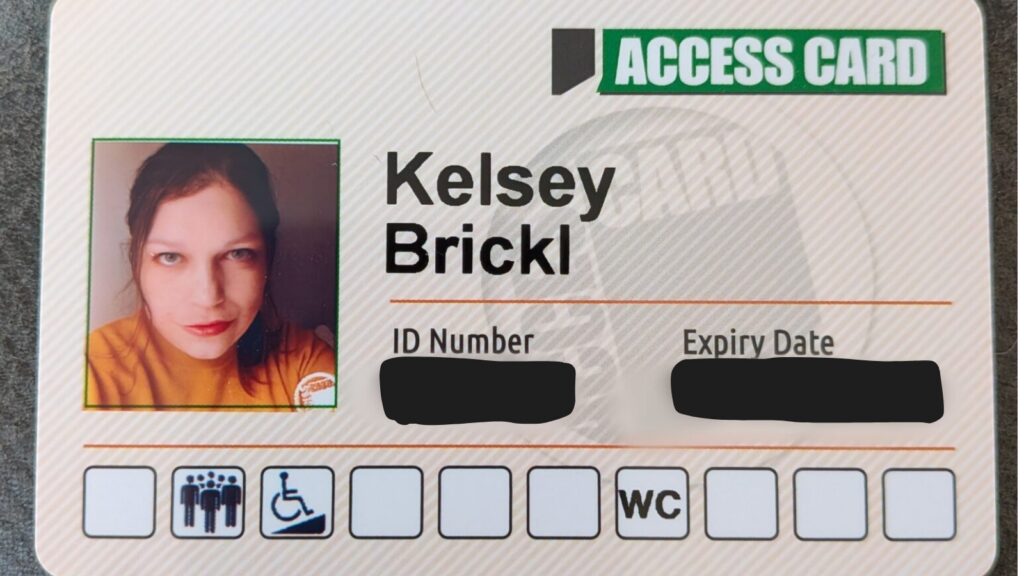
Sometimes a small discount is offered on an accessible ticket on Broadway, but not always. On the West End, in order to be granted a discounted Disabled ticket, a patron must usually provide proof of Disability. An Access Card is very widely accepted by London theatres for this purpose.
Issued by Nimbus Disability, an Access Card can be used by Brits or others visiting the UK, including Americans, who may struggle to get more definitive proof of even very severe disability due to a less rigidly documented system in the United States.
In order to get an Access Card, Nimbus requires extensive medical documentation as well as sworn questionnaires about the impacts of disabilities and specific needs. The card itself is then approved or denied and comes with a unique ID number, expiration date, a photograph of the holder, and icons indicating things such as wheelchair use, a need for a caretaker at all times, inability to queue for extended times, use of a guide/assistant animal, vision impairment, etc.
In my capacity as the Founder and Director of Accessible France and now with my work with Ghost Light Access, I strongly recommend that those with genuine disability needs investigate an Access Card.
Contrary to what some online narratives might defensively say, having a standardized identification form for disability isn’t rude, condescending, or otherwise negative. Some gatekeeping is necessarily protective of theatres themselves and of the entire disability community.