By: Kelsey Maurine Brickl
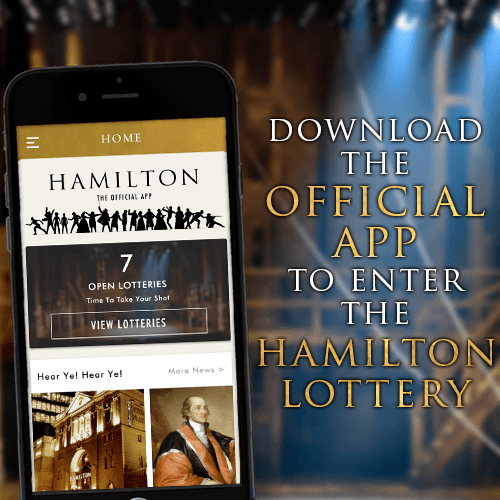
For years, Hamilton has offered $10 tickets through its Ham4Ham lottery. Winners may purchase up to two, according to the official app listing. A wheelchair user considering that offer needs one more piece of information: how to obtain a usable wheelchair location at $10, with an adjacent companion seat. The public-facing app description does not answer it.
A newly announced rush at Studio Seaview makes the problem easier to see. For Spring Awakening previews, the theatre advertises a limited number of $40 front-row tickets for patrons who come to the box office when it opens. There is also a $40 digital lottery. Studio Seaview says its accessible seating locations can be converted for wheelchair use, but the rush announcement does not identify any front-row wheelchair location or explain whether accessible seats are included in either discounted allocation. It gives no procedure for someone whose disability prevents them from waiting in a physical queue.
I use a wheelchair full time. I cannot stand in a rush line, and I need more than a seat that carries an accessibility symbol in a ticketing system. The route to it must work. I need a safe position, an adequate view and appropriate companion seating. A theatre knows the locations it intends to sell before it announces a rush. Disabled patrons should be able to find out whether they can use the offer before traveling to the box office or entering a draw.
The short deadlines in digital lotteries create another barrier when accessible inventory is left to be sorted out later. The Aladdin lottery at the New Amsterdam Theatre gives winners 60 minutes to pay; the box office assigns their seats. The The Lion King lottery at the Minskoff Theatre and Wicked lottery at the Gershwin Theatre publish similar payment windows and leave assignment to the box office. Their show-specific pages do not tell a wheelchair user which accessible locations are in the lottery or how to confirm one beside a companion before paying.
Broadway Direct’s general lottery terms permit purchasers to request accessible seating during checkout or contact the company after purchase. That provision should be acknowledged. It does not settle whether the requested location is available at the lottery price while the winner’s payment clock is running. Contacting someone after buying a ticket also leaves the patron having paid before knowing whether the theatre can provide a seat they can use.
The ADA ticketing regulation, 28 C.F.R. § 36.302(f), requires accessible seats to be offered during the same stages of sale as other seats, including promotions and lotteries, under applicable rules governing purchase methods and prices. The Justice Department’s guidance describes the disadvantage created when other patrons can buy immediately but wheelchair users must call or email and await a response. If a rush sells out before that response arrives, the patron has lost the chance to buy at the advertised price.
Theatres can correct this in their ticket allocation and sales procedure. Before a rush opens, management should identify the accessible seats available at the rush price, including companion locations, and give box-office staff authority to sell or convert them when the patron reaches the counter. If the promoted front row cannot accommodate a wheelchair, the theatre should identify the accessible location offered at the same price and disclose the difference in view. An in-person rush also needs a timely way for a patron who cannot wait in line to compete for the available tickets. The answer must operate when sales open, while tickets remain.
Lottery operators have a different deadline to meet. A winner requesting wheelchair seating needs confirmation of a usable location, the applicable price and companion arrangement within the ordinary purchase window. The checkout system and the people handling access requests must be able to complete that transaction before the ticket is released to someone else. Publishing an email address without ensuring a response during a 60-minute window does not solve the timing problem.
These published terms do not establish that any named theatre has refused a wheelchair user a discounted ticket. They show where the procedures are undisclosed and where a delay could defeat the offer. Theatres and producers hold the seat maps, promotional allocations and instructions given to ticketing staff. They can publish enough of that information for a Disabled patron to enter a lottery or approach a rush knowing what can actually be bought. Until they do, the cheapest ticket in the house may be available to everyone who can use the purchase procedure, while the person who needs an accessible seat is still trying to learn the rules.
Photo courtesy of Blumenthal Arts
Update — September 24, 2026
After publication, I sent formal written accessibility inquiries to Nederlander concerning the Wicked lottery at the Gershwin Theatre, The Lion King lottery at the Minskoff Theatre, and the Ham4Ham lottery for Hamilton at the Richard Rodgers Theatre.
Broadway Direct gave me effectively the same answer for all three. Each theatre holds wheelchair-accessible and companion seats for its lottery. A winner can request them during checkout. If those seats are unavailable for the performance won, Broadway Direct says the patron will be accommodated at another performance at the lottery price.
That is considerably better than the public-facing information suggests. It also leaves Nederlander and Broadway Direct with a problem they can now correct.
The New York City Human Rights Law requires public accommodations to provide reasonable accommodations and to engage in a cooperative dialogue within a reasonable time when an accommodation is requested or the provider has notice that one may be needed. NYC Commission on Human Rights guidance specifically considers whether a public accommodation has a policy informing patrons how to request disability accommodations when assessing whether that dialogue occurred in good faith.
Nederlander and Broadway Direct cannot now say that the procedure is unknown, technically difficult, or still to be devised. They have described it to me three times in writing. Wheelchair and companion inventory is held for these lotteries; the request can be made during checkout; and the lottery price is protected through another performance when the necessary inventory is unavailable for the performance won.
Theatres of New York City: Put your disability-accommodation procedures where Disabled patrons can actually find them before attempting to use the ticket program.
Ghost Light Access has now formally directed Nederlander and Broadway Direct to put this information on their public-facing lottery pages. Disabled patrons should not have to send legal notices to discover material accessibility procedures governing an advertised ticket program.
The original article identified an information gap rather than alleging that these theatres were refusing wheelchair users discounted tickets. Broadway Direct’s responses establish that the missing information exists. There is no legitimate reason to keep it buried in individual correspondence rather than tell Disabled patrons how the lotteries actually work.
I look forward to updated websites and apps.
Update 2 — September 24, 2026
Studio Seaview has now provided a substantive written response concerning Spring Awakening. The theatre’s General Manager confirmed in writing that one of the ten $40 rush locations is affirmatively reserved as a wheelchair-accessible location with an adjacent companion seat at the same price, and that a Disabled patron who cannot physically remain in the rush queue can preserve their place through a voucher procedure. The separate TodayTix lottery remains unresolved.
Studio Seaview states that the lottery awards standing-room locations and that a Disabled winner who cannot use standing room may request an accessible seat at the same $40 price, but only “subject to availability.”
Ghost Light Access has therefore asked Studio Seaview to clarify whether wheelchair-accessible and companion inventory is actually held for lottery winners, as Broadway Direct has now confirmed occurs at the Gershwin, Minskoff, and Richard Rodgers theatres, and to establish such a procedure if it is not.
Likewise, Ghost Light Access has stated in writing that Studio Seaview must identify a permanent written route through which Disabled patrons who cannot use telephone communication can complete these time-sensitive transactions and publish its accessible rush and lottery procedures so that this information is available before a Disabled patron attempts to use either $40 program.