By Kelsey Maurine Brickl
Disability representation in entertainment is sometimes measured by who appears onstage or onscreen. Recent productions are also demonstrating how much depends upon who is hired behind the scenes, whether Disabled performers can physically use their workplaces, and whether disability is allowed to exist in stories that are not primarily about disability.
The numbers remain low. A recent study by the Ruderman Family Foundation and Geena Davis Institute examined 350 scripted television series from 2016 through 2023. It found that only 3.9 percent of characters had disabilities and nearly 80 percent of Disabled characters were not authentically cast. The report also recommended increasing opportunities for Disabled creators behind the camera.
Theatre has recently produced several conspicuous departures from that history.
In August, Deaf actor Erin Rosenfeld became the first Deaf performer cast in Dear Evan Hansen, sharing the role of Zoe Murphy in Summer Stock Stage’s Central Indiana production. Rosenfeld said the production allowed her to explore how American Sign Language and Zoe’s Deaf identity affected the Murphy family’s relationships. Zoe was not originally written as Deaf.
Broadway’s Wicked crossed another threshold in March 2025 when Jenna Bainbridge became the first wheelchair-using actor to play Nessarose onstage, following wheelchair user Marissa Bode’s casting as Nessarose in the film adaptation.
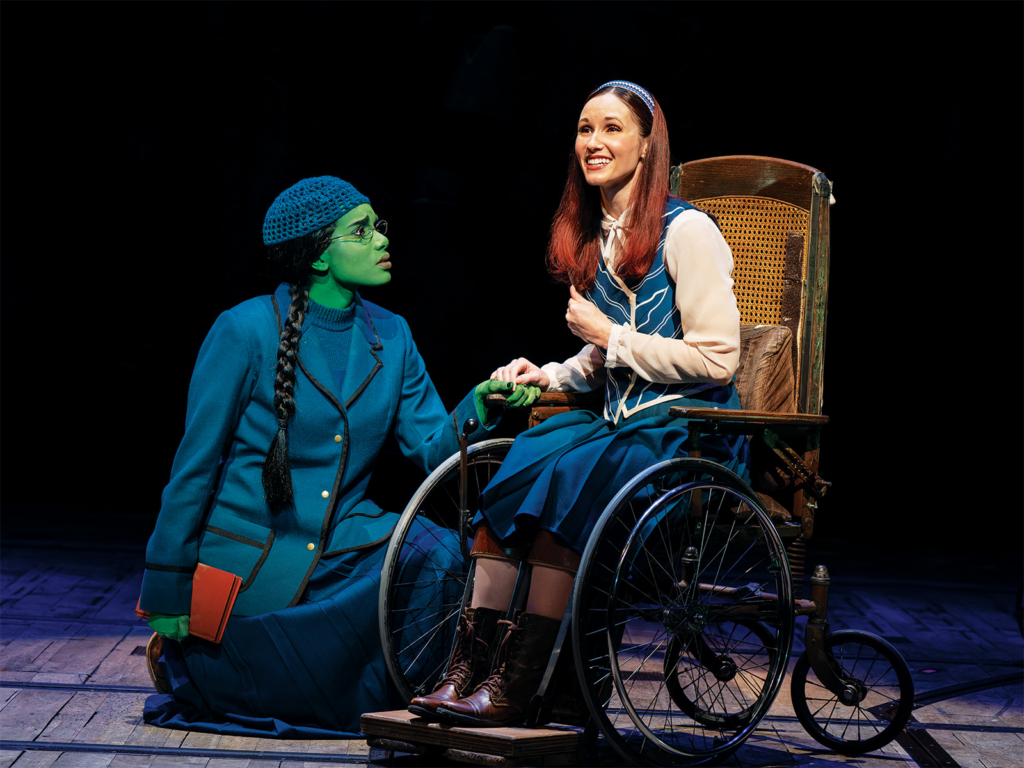
Photo by Joan Marcus, courtesy of “Wicked”
Broadway’s Wicked crossed an important threshold when Jenna Bainbridge became the first wheelchair user to play Nessarose on Broadway, following Marissa Bode’s casting in the film. The film also hired wheelchair user Chantelle Nassari as disability coordinator and worked with Bode and wheelchair dancer Hannah Raynor on elements including Nessarose’s wheelchair and choreography.
Bainbridge’s casting also illustrates two different kinds of accessibility. The first is accessibility of the role itself. Nessarose’s existing Broadway track requires her to stand and walk in Act II. Bainbridge, an ambulatory wheelchair user, told Playbill that she could perform the track without changing it. Her casting demonstrates that Nessarose need not be played by a nondisabled actor, but the existing staging still excludes non-ambulatory wheelchair users. Future productions should continue casting Disabled actors while examining whether standing and walking actually need to remain requirements of the role.
The second issue is accessibility of the workplace. Casting an ambulatory wheelchair user does not resolve inaccessible dressing rooms, toilets, wings, rehearsal rooms and backstage routes. Ghost Light Access has previously documented how these barriers can exclude non-ambulatory actors and other wheelchair-using professionals from Broadway workplaces. Authentic casting is progress, but it cannot substitute for making the role and the workplace accessible to a broader range of Disabled people.
Ali Stroker’s career demonstrates another direction. The first wheelchair user to win a Tony Award, she is now playing Rona Lisa Peretti in The 25th Annual Putnam County Spelling Bee, a character whose story is not about wheelchair use. Disabled performers need both opportunities: characters in which disability is part of the story and characters allowed simply to be Disabled while having an entirely different story to tell.
Those examples also show how much territory disability representation can cover. A Deaf actor can play a character whose Deafness becomes part of an existing family story; a wheelchair user can play a character whose story has little to do with her wheelchair; and disability itself can be the subject of a work.
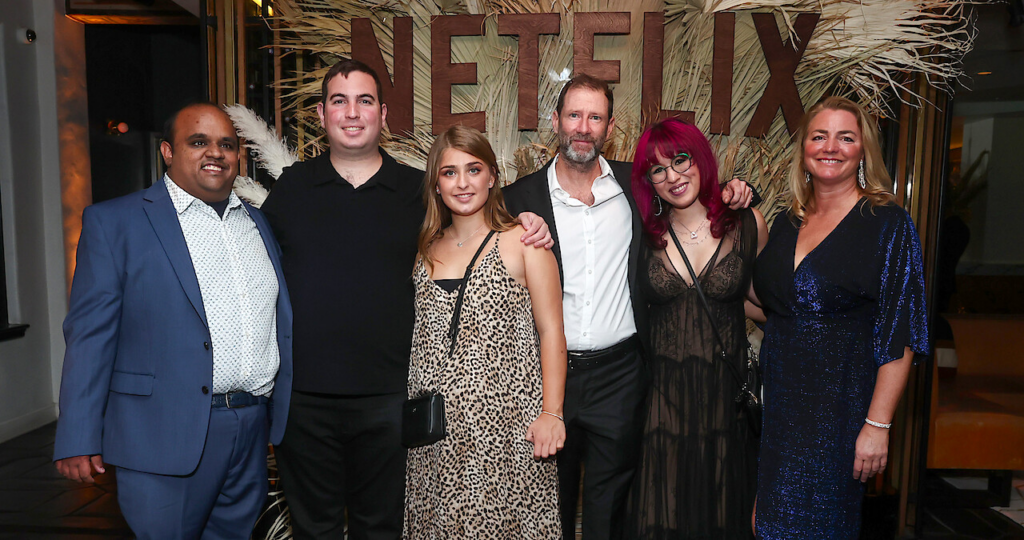
Netflix’s Love on the Spectrum, now in its fourth U.S. season, follows autistic adults dating and forming relationships while also employing neurodivergent people behind the camera. Co-creator Cian O’Clery has said autistic people work on the production team, and autistic author Jennifer Cook has worked directly with participants.
Emma McIntyre/Getty Images for Netflix
Employment remains a significant part of the picture. UK accessibility organization Attitude is Everything surveyed 71 Deaf, Disabled and neurodivergent music creators and found only 20 percent felt confident disclosing their access requirements. In separate research, 91 percent of 149 Black Disabled music creators and professionals surveyed were dissatisfied with the industry’s support.
Representation therefore reaches well beyond casting. Comedy clubs need stages Disabled comedians can actually reach. Blind and Deaf professionals need communication and navigation access. Autistic workers may need sensory or communication accommodations. Film sets, concert venues and theatres need workplaces in which Disabled writers, technicians, designers, journalists, crew members and performers can do their jobs. Putting a Disabled person in front of an audience or camera is valuable representation, but it does not tell us who was able to get through the doors behind them.
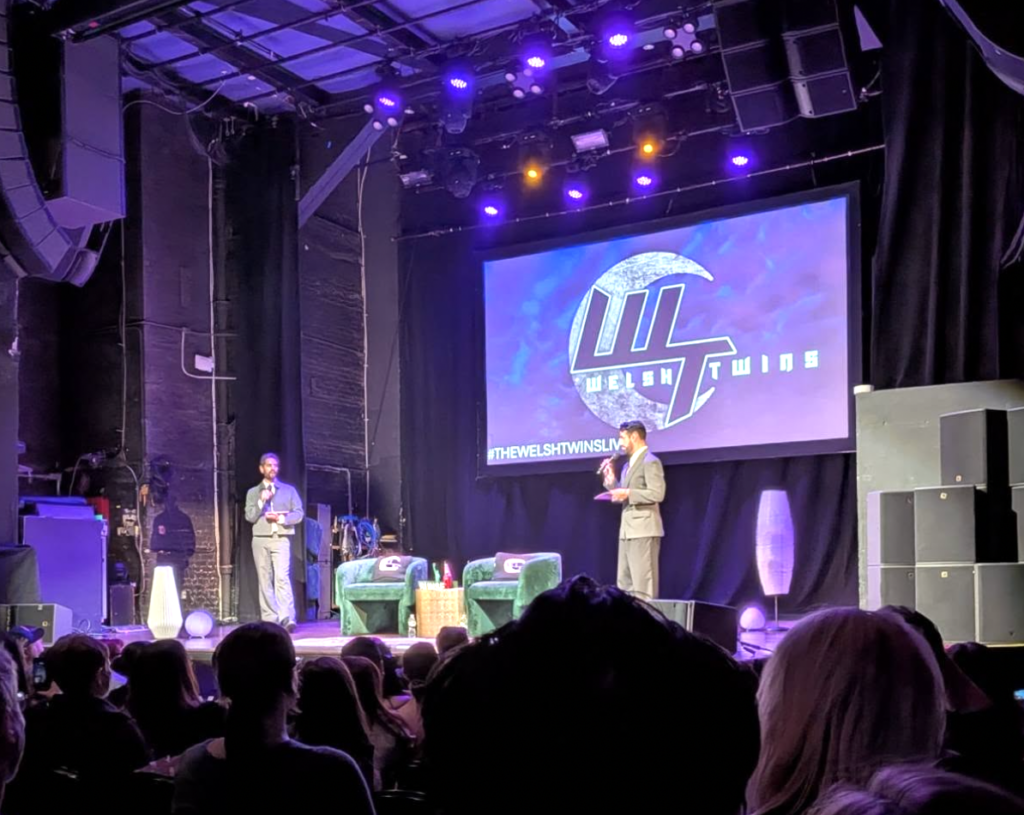
Disability comes in many forms, and not all disabilities are visible. The Welsh Twins have openly discussed their dyslexia on their YouTube channels many times and mentioned it with self-deprecating jokes at their live show I attended at The Gramercy Theatre, a venue that was inclusive, accommodating, and accessible.
The Welsh Twins at The Gramercy Theatre, Sept 28, 2026. Photo by Kelsey Maurine Brickl.
There is also a substantial body of disability that entertainment encounters through war.
The World Health Organization identifies amputations, spinal-cord injuries, traumatic brain injuries, burns and peripheral nerve injuries among the new disabilities commonly created by armed conflict, alongside psychological and social consequences of trauma and displacement. Its 2026 guidance treats rehabilitation as an essential health service during conflicts.
Those injuries affect civilians as well as military personnel. WHO estimated in May that approximately 43,000 people injured in Gaza since October 2023 had sustained life-changing injuries, including more than 5,000 traumatic limb amputations and more than 1,300 major traumatic brain injuries. Approximately 10,000 of those with life-changing injuries were children.
That history will also enter an upcoming Ghost Light Access interview with Kosovo War survivor and filmmaker Fitim Krasniqi about The Journalist’s Mission, whose story includes an American journalist attempting to save a child during the Kosovo War. War stories frequently concentrate on the event itself: the attack, escape, rescue, battle or death. Disability can continue for decades afterward, among civilians as well as combatants, through brain injury, limb loss, spinal injury, chronic pain, PTSD and other consequences that do not end when the fighting does.
The arts have considerably more room for those lives than the familiar category of the “disability story” suggests. Disabled people can be romantic leads, comedians, musicians, war survivors, family members, villains, technicians, critics, costume designers, documentary subjects and characters whose disability is barely relevant to the plot.
Sometimes disability should be central to the story. Sometimes it should simply be present because Disabled people are present in human life. Getting that range onto stages and screens requires more than visible casting. It requires Disabled people to be able to enter the workplaces where those stories are written, designed, rehearsed, filmed and performed.